

How much does a building permit cost in Alicante?
The price of a building permit in Alicante depends on the type of work and the material execution budget (PEM). There is no single flat rate: the final cost is obtained by applying municipal taxes and fees to the project, to which deposits associated with the work may be added.
In practice, several concepts usually apply: the ICIO (Tax on Construction, Installations, and Works), the urban planning license fee or processing fee, the security deposit for construction and demolition waste management and, if applicable, the fee for occupation of public roads (for containers, scaffolding, or fences). The ICIO is calculated as a percentage of the PEM; the urban planning fee covers the administrative review and may have a fixed and/or variable part; the waste deposit is refundable after justifying its correct management; and the road occupation fee is determined based on surface area and time.
The cost of the building permit in Alicante varies depending on whether it is a minor or major work, the PEM and technical complexity, the need for a project and professional supervision, and the duration of the street occupation. There may also be bonuses or reductions in cases provided for by the ordinance (for example, accessibility or energy efficiency works), always in accordance with the provisions established by the City Council.
To obtain an accurate estimate, it is essential to start from a detailed budget and consult the current Fiscal Ordinance of the Alicante City Council. With these data, your architect, surveyor, or manager can calculate the self-assessment of the ICIO and applicable fees and guide you on necessary deposits and payments before starting the works.
What is needed to obtain a construction permit?
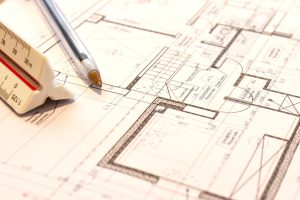
To obtain a construction permit, a complete technical file is usually required, including architectural and structural plans signed by qualified professionals, a descriptive report, specifications, and location sketches. These documents must certify compliance with current urban planning and construction regulations, height parameters, setbacks, and land occupation.
In the legal and administrative section, proof of ownership or authorization from the owner, the land use certificate or urban planning compatibility and, if applicable, certificates of alignment or numbering are normally requested. Everything must demonstrate that the project is viable on the site and that it complies with municipal regulations and existing easements.
Specific studies and plans may also be required, such as structural calculations, soil mechanics studies, a safety and civil protection program, and construction waste management. If the project warrants it, environmental impact authorizations, service feasibility (water, drainage, energy), and accessibility measures are attached.
Finally, the process includes the official application to the authority, the payment of fees and duties, the designation of those responsible for the work and the contractor, and, where appropriate, policies or guarantees. During the process, corrections or prior and on-site inspections may be requested to verify that the execution conforms to what was authorized.
Who can apply for a building permit?
Owners and direct responsible parties
The natural applicant for a building permit is usually the property owner or title holder, whether a natural or legal person. It can also be processed by their legal representative when proof of representation exists. In general terms, the administration requires that whoever requests the urban planning license has standing through ownership of the property or the right affected by the works.
Other legitimate persons
In addition to the owner, the community of owners may request the license when the works affect common elements, as well as the lessee/tenant or user of the property if they have express authorization from the owner. In the field of developments, the developer of the work may appear as the applicant when they hold sufficient rights over the property (ownership, concession, or building rights).
Processing by third parties on behalf of the owner
The management can also be carried out by a competent technician (e.g., an architect) or a construction company on behalf of the owner, provided there is a power of attorney or documented authorization. In these cases, the applicant for legal purposes remains the legitimate owner, and the third party acts as a representative to submit and follow the file before the corresponding city council.
What do I need to process a construction permit?
To process a construction permit, it is normally requested to prove ownership or right of use of the plot (deed, title, or contract with authorization), valid identification of the applicant and, when applicable, proof of land use and alignment. General project data and a location sketch of the property are also usually required.
In the technical section, the authority requests architectural and structural plans of the project, a descriptive report, structural calculations and, depending on the type of work (new, expansion, or remodeling), a budget, schedule, and material specifications. Depending on the scope, studies such as soil mechanics, urban or environmental impact, and solutions for electrical, hydraulic, and sanitary installations may be required.
In addition, the completion of official forms, the payment of fees with proof of payment and, in many jurisdictions, the participation and signature of a Responsible Director of Works (or equivalent) is usually required. For certain cases, additional approvals are requested (for example, Civil Protection, heritage, or federal zone), complementary permits (demolition, occupation of public roads), and photographic evidence of the current state of the plot, along with the validity and conditions of the permit that you must respect.